Best Greyhound Betting Sites – Bet on Greyhounds in 2026
Loading...
GamStop is the UK’s national self-exclusion scheme for online gambling. It works — within its scope. Register with GamStop and every UKGC-licensed gambling site is required to block your access for the period you choose. But that scope ends at the UK regulatory border. Offshore bookmakers licensed in Curacao, Malta, Gibraltar or elsewhere are not part of the scheme. If you are using non-GamStop greyhound betting sites, GamStop cannot help you. Other tools can.
Self-exclusion is not a single mechanism. It is a spectrum of options — from national schemes that block entire categories of operators, to device-level software that prevents your hardware from connecting to gambling sites, to individual operator tools that let you restrict your own account. Understanding what each option covers, where it falls short, and how to combine them into an effective personal protection system is as important as any betting strategy for punters who recognise the need for limits.
How GamStop Works and Where It Stops
GamStop is a free service operated by the National Online Self-Exclusion Scheme Limited, a non-profit. Registration takes a few minutes at gamstop.co.uk. You provide your name, date of birth, email address and home address. You choose a self-exclusion period: six months, one year or five years. Once registered, every UKGC-licensed online gambling operator is required to block accounts matching your details and prevent new account creation.
The scheme covers all of the UK’s regulated online gambling market. Since March 2020, all UKGC-licensed online operators have been required to participate in the scheme. It applies to sportsbooks, casinos, poker rooms, bingo sites and lottery platforms holding UKGC licences. The coverage is comprehensive within the regulated space. All major UK brands — from the large corporate operators down to smaller independents — participate because their licence conditions require it.
Where GamStop stops is at the jurisdictional line. Operators without UKGC licences have no obligation to check the GamStop register, and no mechanism for doing so even if they wanted to. This includes the majority of non-GamStop greyhound bookmakers discussed in this content — platforms licensed in Curacao, the Isle of Man or other offshore jurisdictions. GamStop is invisible to them. If you are registered with GamStop and you sign up at an offshore bookmaker, the bookmaker will accept your registration, your deposit and your bets without any reference to your self-exclusion status.
This is the fundamental limitation. GamStop protects you from the regulated market. It does not protect you from yourself outside that market. For bettors who need broader coverage, the tools below fill the gap.
Gamban — Device-Level Blocking
Gamban works differently from GamStop. Instead of relying on operators to block your account, Gamban blocks your device from accessing gambling websites and apps. It installs as software on your phone, tablet or computer and maintains a continuously updated database of gambling domains — including offshore sites, crypto casinos, and betting exchanges that GamStop does not cover.
Once installed, Gamban prevents your device’s browser from loading any URL in its database. It also blocks gambling apps from functioning. The blocking is persistent — it runs in the background and cannot be easily disabled without contacting Gamban’s support team, which introduces a deliberate delay. That delay is the point: it transforms a momentary impulse to gamble into a multi-step process that most people will not complete.
Gamban is a subscription service, currently priced at annual rates that vary by the number of devices covered. Multi-device plans cover a phone, tablet and computer simultaneously. The cost is modest relative to the financial risk it mitigates — less than the price of a few losing bets. Gamban supports Windows, macOS, iOS and Android, and the database covers thousands of gambling sites across all jurisdictions, making it the most comprehensive device-level blocking tool currently available.
The limitation is that Gamban only protects devices where it is installed. A bettor who installs it on their phone but not their work laptop, or who buys a prepaid phone specifically to access gambling sites, can circumvent the protection. Gamban works best when installed on every device the bettor regularly uses, and when the bettor genuinely wants the barrier rather than installing it under external pressure while privately planning to work around it.
BetBlocker and MOSES — Free Alternatives
BetBlocker is a free, charity-funded blocking tool that provides similar device-level protection to Gamban without the subscription cost. It is available for Windows, macOS, iOS and Android, and covers a wide range of gambling domains. Users set a blocking period — anything from 24 hours to five years — and the software prevents access to listed sites for the duration.
BetBlocker’s gambling site database is maintained by the organisation behind the tool and updated regularly, though its coverage of newly launched offshore sites may lag slightly behind Gamban’s commercially maintained list. For most users, the practical difference is negligible — both tools block the vast majority of accessible gambling platforms. The choice between them typically comes down to budget (Gamban requires payment, BetBlocker is free) and the depth of coverage needed for niche offshore operators.
MOSES (Multi-Operator Self-Exclusion Scheme) takes a different approach. Rather than blocking at the device level, MOSES coordinates self-exclusion directly with participating land-based betting shops across Great Britain. You register with a single phone call, and MOSES notifies participating high-street bookmakers to exclude you from their premises. The limitation is scope — MOSES covers physical betting shops, not online operators. For punters using non-GamStop sites, MOSES does not address online access at all and should be considered a supplement to device-level blocking and GamStop rather than an alternative.
A layered approach is most effective. Register with GamStop to cover the UKGC-regulated online market. Install Gamban or BetBlocker on your devices to cover offshore sites. Register with MOSES if you also use physical betting shops. Each layer addresses a different access point, and the combined coverage is substantially more comprehensive than any single tool alone.
Individual Site Self-Exclusion
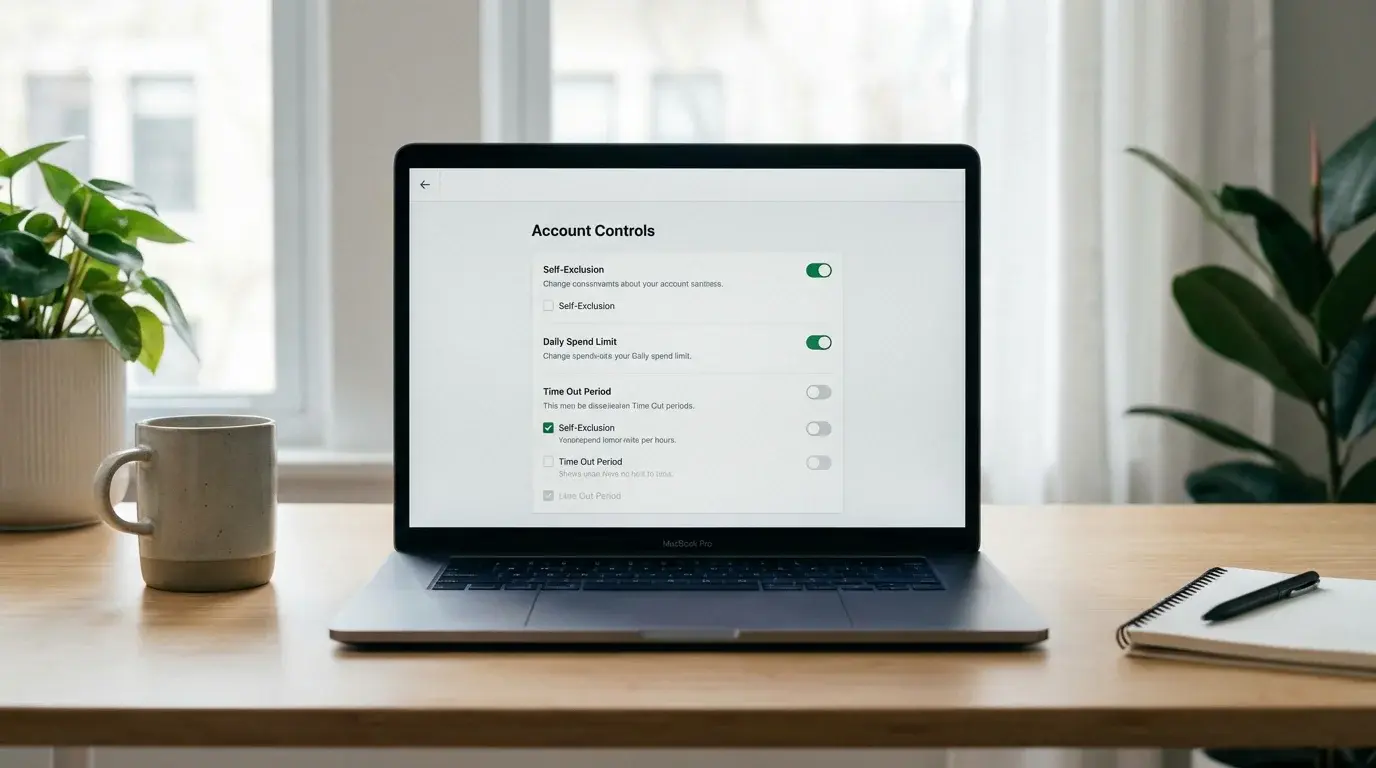
Most offshore greyhound bookmakers offer some form of account-level self-exclusion, though the implementation varies widely. At a minimum, you can usually close your account by contacting customer support. Some platforms offer a self-exclusion option in the account settings — a button or form that locks the account for a specified period (typically 24 hours, one week, one month or six months).
The reliability of individual site self-exclusion depends entirely on the operator. Well-run platforms enforce the exclusion promptly and do not allow you to reopen the account before the period expires. Poorly run platforms may process the request slowly, allow reactivation through a simple email to support, or fail to block new account creation with the same details. There is no external oversight equivalent to the UKGC’s enforcement of GamStop compliance.
If you use individual site self-exclusion at a non-GamStop bookmaker, document the request — screenshot the confirmation, save the email exchange, note the date and the exclusion period. This documentation may be useful if the operator fails to enforce the exclusion and you need to escalate a complaint to their licensing authority.
Individual site exclusion is the weakest form of self-exclusion because it only covers one operator at a time, it relies on that operator’s compliance, and it does not prevent you from simply registering at a different site. It is best used as a targeted measure — closing an account at a specific bookmaker where you have noticed problematic patterns — alongside broader tools like Gamban or BetBlocker that cover the wider landscape.
Exclusion Is a Tool — Not a Solution by Itself
Every self-exclusion tool described above shares the same fundamental characteristic: it creates friction between the impulse to gamble and the act of gambling. Friction works. It slows you down, gives the rational part of your brain time to override the impulsive part, and makes the path of least resistance something other than placing a bet. But friction is not treatment. It does not address the underlying reasons why someone gambles compulsively, and it does not replace professional support for those who need it.
For punters who use self-exclusion tools as a complement to genuine self-regulation — setting limits, monitoring behaviour, maintaining other interests and income sources — these tools are effective and empowering. They provide a structural backup for the occasional moments when discipline falters.
For those experiencing a genuine gambling problem, self-exclusion tools are a first step, not a final one. Free support is available through GamCare (www.gamcare.org.uk, helpline 0808 8020 133) and the Gordon Moody Association, which offers residential treatment for severe gambling addiction. The tools keep the door closed while you do the harder work of understanding why you kept opening it.