Best Greyhound Betting Sites – Bet on Greyhounds in 2026
Loading...
The English Greyhound Derby is the biggest single event in British greyhound racing — the race that defines the sport’s annual calendar and concentrates more betting interest into a single final than any other meeting on the circuit. The prize money, the media attention, the quality of the field and the pressure on every runner make the Derby a unique betting proposition. It is not just a graded race with a bigger purse. It is a multi-round tournament that tests dogs across several weeks of eliminators, and the skills required to handicap it differ meaningfully from picking winners on a Tuesday evening at Romford.
For bettors who spend most of the year on everyday meetings, the Derby represents an opportunity to apply their form-reading skills to the highest level of competition — and a temptation to overbet on the biggest stage. Both impulses need managing. The Derby rewards preparation, and it punishes the kind of emotional betting that marquee events tend to encourage.
History and Format of the English Greyhound Derby
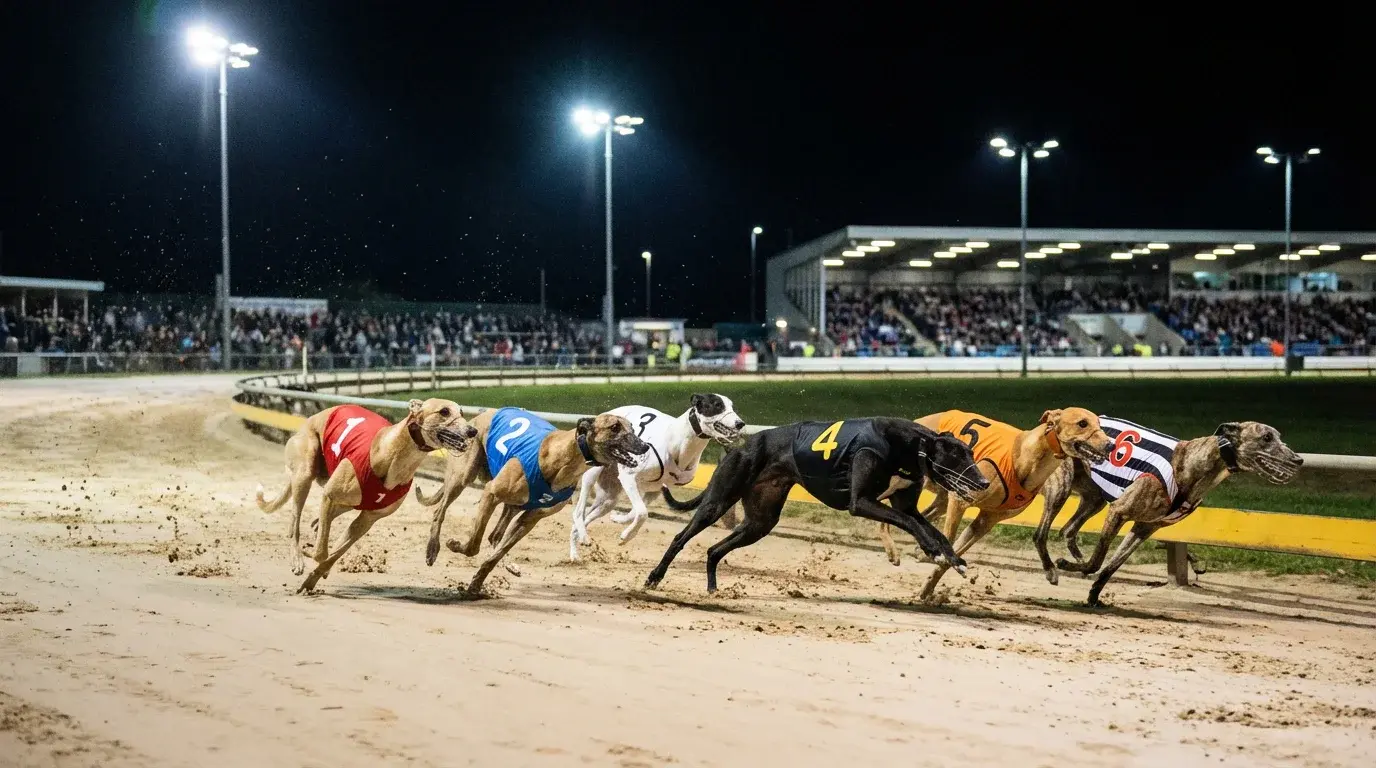
The English Greyhound Derby has been held since 1927, making it one of the oldest and most prestigious events in the sport. It has been hosted at various venues across its history, including White City, Wimbledon, Towcester and Nottingham. The race is run over 500 metres at the current host track, Towcester, and the format follows a knockout tournament structure with multiple elimination rounds leading to a six-dog final.
The tournament begins with first-round heats, with the competition typically attracting around 180 or more entries spread across multiple heats. Winners and fastest losers progress to the next round. This process repeats through subsequent rounds, quarter-finals and semi-finals until six dogs remain for the final. The entire competition spans several weeks, with rounds typically separated by seven to ten days. This multi-round structure is critical for bettors because it means a dog must perform consistently across five or six races to reach the final — not just peak for one evening.
The prize money for the Derby winner is the largest in UK greyhound racing, with the winner receiving £175,000 in recent runnings. Prize money extends through the semi-finals and beyond, which means even dogs that do not reach the final earn significant purses. The financial stakes attract the best-prepared dogs from the top kennels, and the competition is correspondingly fierce. Dogs that dominate graded racing at their home tracks can find themselves mid-pack at Derby level.
The Derby’s historical results reveal some consistent patterns. Dogs with early pace have won more frequently than closers, which reflects the short-distance bias — at 500 metres, there is less time and space for closers to make up ground than at longer distances. Trap draw matters, but less than in ordinary graded races because Derby-quality dogs are more capable of overcoming positional disadvantages through raw speed. Trainers with Derby experience — specifically, those who have managed dogs through multi-round tournaments before — hold a measurable advantage because they understand the physical and tactical demands of peaking a dog across several weeks rather than for a single race. Charlie Lister holds the record as the most successful Derby trainer, having won the event seven times.
How to Assess Derby Contenders
Assessing Derby contenders requires looking beyond standard form analysis because the competition context is fundamentally different from graded racing. Five factors deserve particular attention.
Round-by-round progression. A dog that wins its first-round heat convincingly (clear leader, fast time, no interference) is signalling that it has arrived at the competition in peak condition. A dog that scrapes through as a fastest loser, finishing second after being bumped at the first bend, may have the underlying ability but is not demonstrating it under pressure. Track the progression from first round through quarters and semis. Dogs that improve with each round — posting faster times or wider margins — are building momentum. Dogs that plateau or slow down may have peaked too early.
Time comparison across rounds. Because all rounds are run at the same track over the same distance, the finishing times are directly comparable. A dog that ran 28.90 seconds in the first round and 28.60 in the semi-final is getting sharper. A dog that ran 28.50 in the first round and 28.85 in the semi-final is decelerating. Raw times matter in the Derby because the quality of opposition is high enough that slow runs cannot be explained away by weak fields.
Trap draw in the final. The final trap draw is typically determined by the racing manager based on the dogs’ running styles and semi-final performances. While Derby-quality dogs can win from any trap, the draw still matters at the margins. A confirmed railer in trap 1 has a cleaner path to the first bend than the same dog drawn in trap 4 with traffic on both sides. Check how each finalist has performed from their allocated trap at the host track specifically — not just from that trap number in general.
Trainer and kennel pedigree. Certain trainers appear in Derby finals repeatedly. Their dogs arrive with the benefit of an experienced preparation programme designed for multi-round competition. A first-time Derby trainer may have a dog with the talent to win, but the management of training loads, race fitness and psychological readiness across five rounds is a skill that improves with experience. Do not dismiss the trainer factor as a tiebreaker — in a field of six dogs that have all proved their class, the intangibles of preparation can be decisive.
Physical condition. Weight is a useful indicator across Derby rounds. A dog maintaining a stable racing weight throughout the competition is handling the schedule well. A dog losing weight steadily may be under stress from the intensity of the programme. Weight gain can indicate rest between rounds but also potential dulling of race sharpness. These are not conclusive signals, but they add texture to an assessment that pure finishing times cannot provide.
Ante-Post vs Day-of Betting
The Derby is one of the few greyhound events with a meaningful ante-post market. Bookmakers offer odds on likely finalists weeks before the first round, and these markets remain active through each elimination stage. Ante-post prices are significantly longer than day-of-final prices because they incorporate the uncertainty of the dog reaching the final at all — an injury, a poor heat, or an unlucky draw in the eliminators can end a campaign before the final.
The value in ante-post Derby betting lies in identifying dogs at the beginning of the competition that the market has underestimated. If your research identifies a dog with elite sectional times, a favourable first-round draw, and a trainer with proven Derby management — but the market has it at 20/1 because it lacks name recognition from open-race wins — backing it ante-post locks in a price that will contract dramatically if it progresses through the rounds. The risk is that the dog does not reach the final, in which case the ante-post bet is lost entirely. Most ante-post markets on greyhound events are non-refundable if the dog does not make the final, so this is money at risk from the moment of placement.
Day-of-final betting removes the elimination risk but offers shorter odds. By the time six finalists are confirmed, the market has incorporated all available information — round-by-round times, trap draws, weight data, trainer comments. The pricing is tighter and the opportunities for value are smaller, though they still exist for punters whose analysis of the specific final conditions (trap draw interaction, pace dynamics, likely first-bend scenarios) is sharper than the market’s consensus.
A blended approach suits most punters: a small ante-post bet on an underpriced contender early in the competition, followed by a more considered bet on the final once the six runners and their draws are confirmed. The ante-post bet is a speculative position with high upside. The final bet is an analytical position based on the complete information set. Together, they cover both phases of the Derby’s betting lifecycle.
The Derby Asks One Question — Can the Dog Handle Pressure?
Graded racing tests speed. The Derby tests everything else as well — consistency, durability, temperament under unfamiliar conditions, and the ability to perform at peak level after weeks of racing at the highest intensity the sport offers. Dogs that win on ability alone sometimes fall short in Derby finals because the accumulated fatigue of four qualifying rounds blunts the edge they had in the first heat.
The most reliable Derby contenders are dogs that have shown adaptability throughout the competition. They have won from different trap positions, they have handled both clean runs and crowded first bends, and their times have held steady or improved as the rounds progress. These dogs have answered the Derby’s central question before the final even begins.
For bettors, the lesson is to evaluate Derby contenders on resilience rather than peak performance. The dog with the fastest single run in the competition is not necessarily the best bet for the final. The dog that has run consistently well across every round, adapting to whatever conditions and draws it faced, is the one most likely to handle the pressure of the biggest night in greyhound racing. The Derby does not go to the fastest dog. It goes to the dog that is still fast when it matters most.